Don’t Choke Your Sound: The Ultimate Home Cinema Guide to Speaker Cable Gauges.
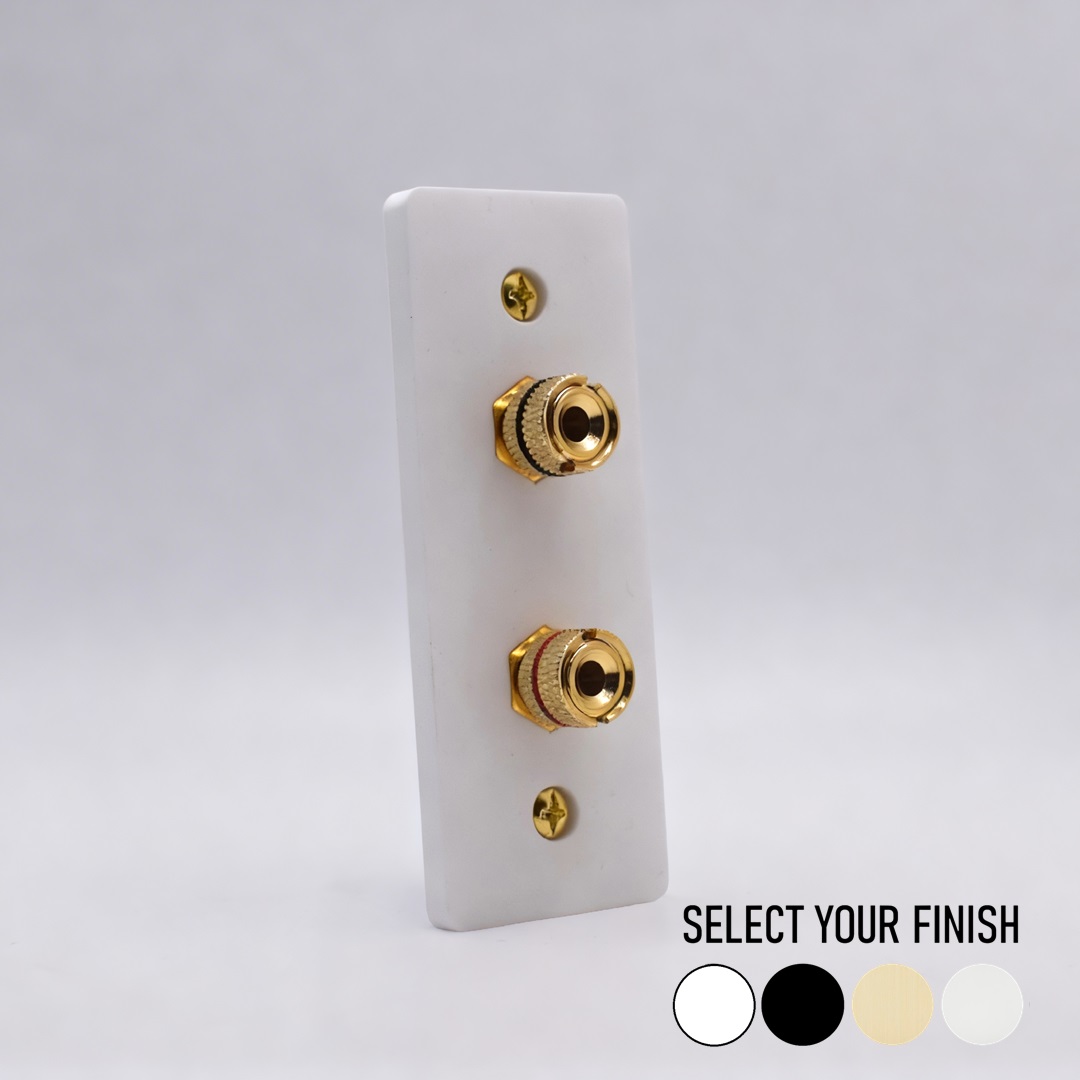
When building a high-performance home cinema, it’s easy to focus all your attention—and money—on the latest flagship equipment. A Lot of attention goes to AV receivers, power amplifiers, and crystal-clear speakers. Yet one of the most common issues in home audio performance comes from poorly selected speaker cable and speaker wall plates. These components sit quietly behind walls and in ceilings, creating a bottleneck between your amp and loudspeakers.
Using undersized or incorrectly specified speaker wire is like a kink in a garden hose, creating resistance that dulls high-frequency clarity, muddles bass, and stresses your amplifier.
Getting your speaker cabling and connection plates right can significantly enhance your system’s sound quality, making your home theater experience more satisfying. It’s not just about buying overpriced “audiophile” cabling; it’s about applying some basic science, physics, and maths to ensure reliable, high-quality sound.

Below is a guide to selecting the correct cable gauge for your application.
1. Understanding AWG & The 5% Resistance Rule
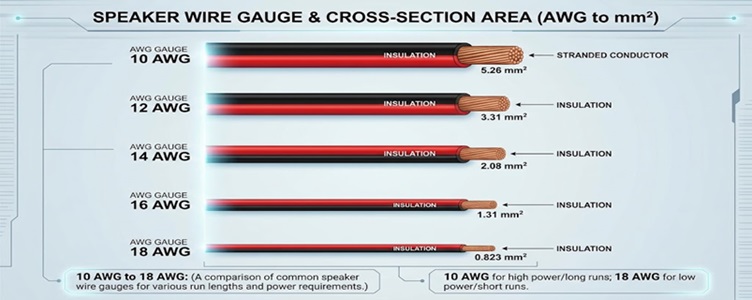
The American Wire Gauge (AWG) is a globally recognised standard for speaker cable thickness.
At first, the AWG scale can seem counterintuitive because a lower AWG number means a thicker wire conductor. A 12 AWG cable is significantly thicker than a 16 AWG cable. Thicker wire contains more conductive material, creating a wider path for electrical current and lower resistance over distance.
[ Thicker Wire / Lower AWG ] ========> Lower Resistance =======> Better Signal Transfer
[ Thinner Wire / Higher AWG ] -------> Higher Resistance -------> Power Loss & Loss of ControlThe 5% Rule
To preserve your receiver’s audio fidelity, audio engineers rely on the 5% Resistance Rule:
To calculate speaker cable resistance, you can use the formula
(R) Resistance = (Rho): Electrical resistivity of the wire material X (L): One-way length of the cable in meters X2 to account for the return travel / (C): The cross-sectional area of the wire in square millimetres.
This formula provides you with the total cable resistance in your system.
- For a 8-ohm speaker, the total cable resistance should not exceed 0.4 ohms.
- For a 4-ohm speaker, the total cable resistance must stay under 0.2 ohms.
If the total cable resistance exceeds these thresholds, the speaker cable acts like a resistor, stealing power from the signal, altering the frequency response, and straining the amplifier.
If you don’t want to do the maths, please feel free to use our speaker cable calculator below.
Speaker Cable Calculator
2. Choosing the Right Gauge for Every Distance
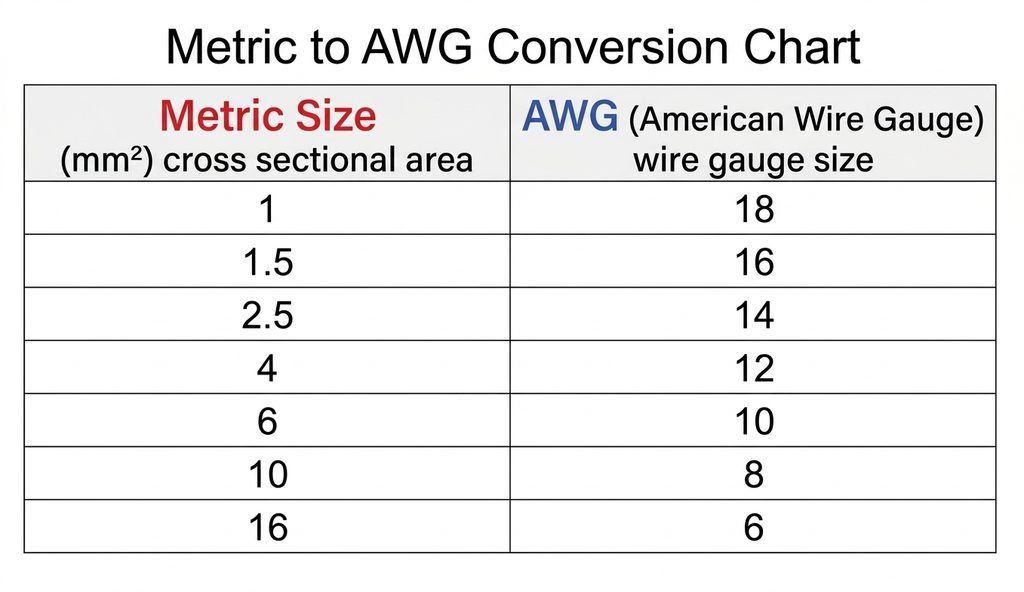
Below is the summary for Pure Oxygen-Free Copper (OFC) cable, based on a one-way cable run distance and speaker impedance load:
| Cable Run Length | 4-Ohm (Ω) Speakers | 6-Ohm (Ω) Speakers | 8-Ohm (Ω) Speakers | Installation Examples |
| (0 – 4.5 m) | 14 AWG | 16 AWG | 16 AWG | Front LCR speakers near AV rack |
| (4.5 – 9 m) | 12 AWG | 14 AWG | 16 AWG | Side surrounds & height/Atmos channels |
| (9 – 15 m) | 12 AWG | 14 AWG | 14 AWG | Rear surrounds in mid-sized rooms |
| (15 – 24 m) | 10 AWG | 12 AWG | 12 AWG | Long rear runs in large rooms/basement theaters |
| (24+ m) | 10 AWG | 10 AWG | 12 AWG | Multi-zone audio to patio/outdoor zones |

Pro Tip for Low-Impedance Speakers: Choosing the right wire gauge shows you care about your system’s performance. For driving low-efficiency or 4-ohm speakers, step down one gauge for every distance tier (e.g., use 14 AWG instead of 16 AWG for short runs, and 12 AWG for medium runs). In most cases, 14 AWG is the sweet spot for a home cinema system. For high-power tallboys and passive subwoofers, consider 12 AWG.
3. OFC vs CCA: Choosing the right cable type depends on your installation needs.
For permanent in-wall setups, OFC offers long-term reliability, while CCA may suit temporary or budget projects. Understanding these differences helps ensure optimal sound quality and system durability.
Not all speaker cable is born equal. When shopping for speaker cable, you will often see two rolls of the same gauge offered at wildly different price points. This is the time to look closely at the jacket printing: one will say OFC (Oxygen-Free Copper), and the other will say CCA (Copper-Clad Aluminium).
OFC Cable: 100% Solid Copper, which offers Low Resistance and Can Handle High Current.
CCA Cable: Aluminium core (60%) with a Thin Copper Skin, which Increases Resistance.
What is Copper-Clad Aluminium (CCA)?
CCA cables have an aluminium core electroplated with an ultra-thin copper skin. | Aluminium has roughly 60% the conductivity of pure copper, so a CCA cable has 30% to 40% higher electrical resistance than an OFC cable of the same gauge thickness. As we learnt above, this degrades sound and puts your AV receiver or amplifier under strain.
If you substitute 14 AWG CCA for 14 AWG OFC on a 12-metre run, you are increasing the resistance to that of a much thinner 16 AWG copper wire.
| Feature | Pure Oxygen-Free Copper (OFC) | Copper-Clad Aluminium (CCA) |
| Conductivity | High (Low resistance) | ~60% of copper’s conductivity |
| Durability & Flexibility | Highly flexible; resists metal fatigue | Brittle; prone to snapping when pulled or bent |
| Corrosion Resistance | Excellent long-term oxidation resistance | Aluminium oxidises rapidly when exposed to air/moisture |
| Heat & Power Handling | Superior current capacity and heat dissipation | Higher heat generation under dynamic bursts |
| Best For | In-wall runs, high-power cinema channels, long distances | Temporary setups, ultra-budget builds, short desktop runs |
Why OFC Copper Cable is best for Home Cinema Installations
- Long-Term Reliability: In-wall installations are permanent. CCA wire oxidises quickly at bare-wire terminations, leading to signal degradation over time.
- Current Demand: AV receivers frequently send massive dynamic power swings to speakers during action sequences. OFC handles these great current changes without heat buildup or signal loss.
- True AWG Performance: Buying 14 AWG OFC guarantees predictable resistance calculated specifically for your run lengths.
4. Key Audio Benefits of Getting It Right
You may be asking why bother measuring distances and picking the right gauge? Here is what you will gain when you optimise your speaker cabling.
- Tight, Punchy Bass: An amplifier controls a subwoofer’s cone movement using the damping factor. High cable resistance seriously degrades this damping factor. This results in loose, boomy bass instead of sharp, dynamic, impactful transients.
- Uncompressed Dynamic Range: High-action movie scenes demand lots of sudden peak bursts of output. Choosing the correct speaker gauge thickness lets the amplifier deliver these power surges without compression or soft clipping.
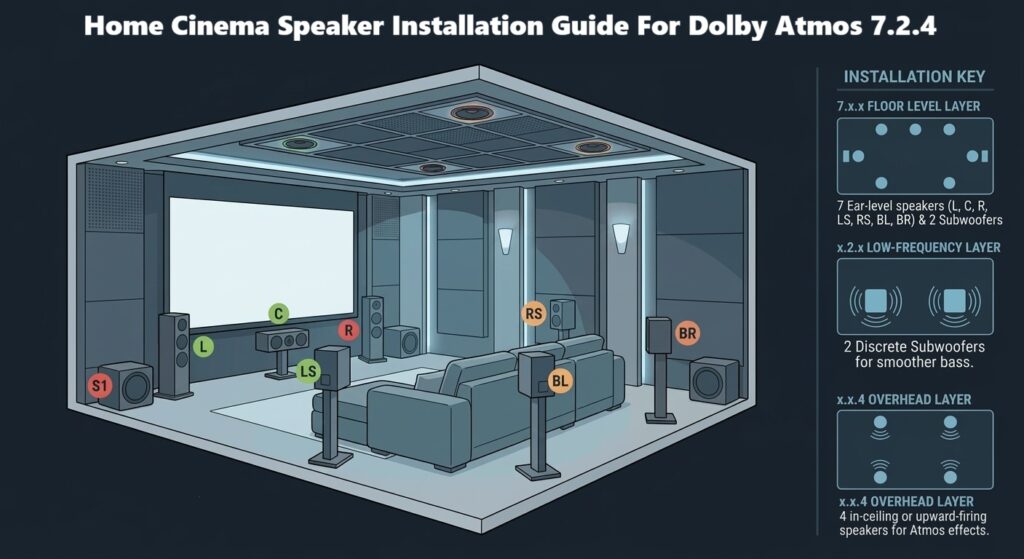
- Balanced Surround Soundstage: Surround sound speakers and overhead Atmos speakers are normally located the furthest away from the AV receiver. Ensure longer runs have adequate cable gauges to deliver rear and height effects crisp and balanced with the front and centre speakers.
5. Installation Best Practices & Code Safety
Beyond picking the right gauge and metal, keep these installation rules in mind before pulling cable through walls:
1. Check Fire Safety Codes: LSZH (Low Smoke Zero Halogen):
Use this for all in-wall and ceiling runs.
Never run standard zip-cord speaker wire inside walls or ceilings. European building codes require LSZH-rated jackets; these are designed to emit very little smoke and no toxic halogen gases if exposed to a fire.
2. Measure Cable Runs with Overhead Slack:
Account for vertical drops and bends.
Best practice is to add an extra 10% to 15% to your total length. Keep in mind that speaker cable runs rarely go in straight lines. Account for studs and joists, and consider the cable’s bend characteristics when routing around corners.
3. Proper Termination with Banana Plugs:
Avoid stray wire short circuits
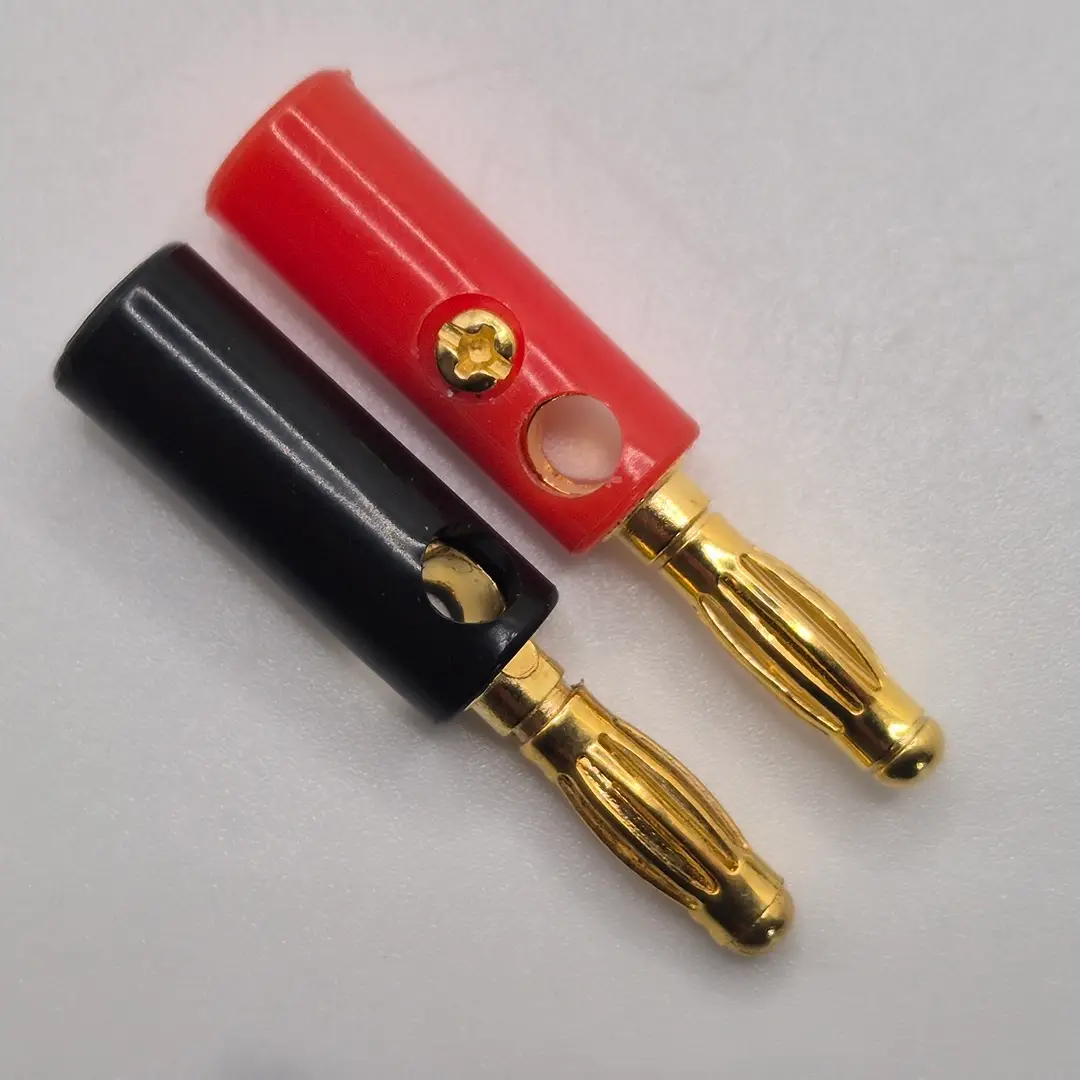
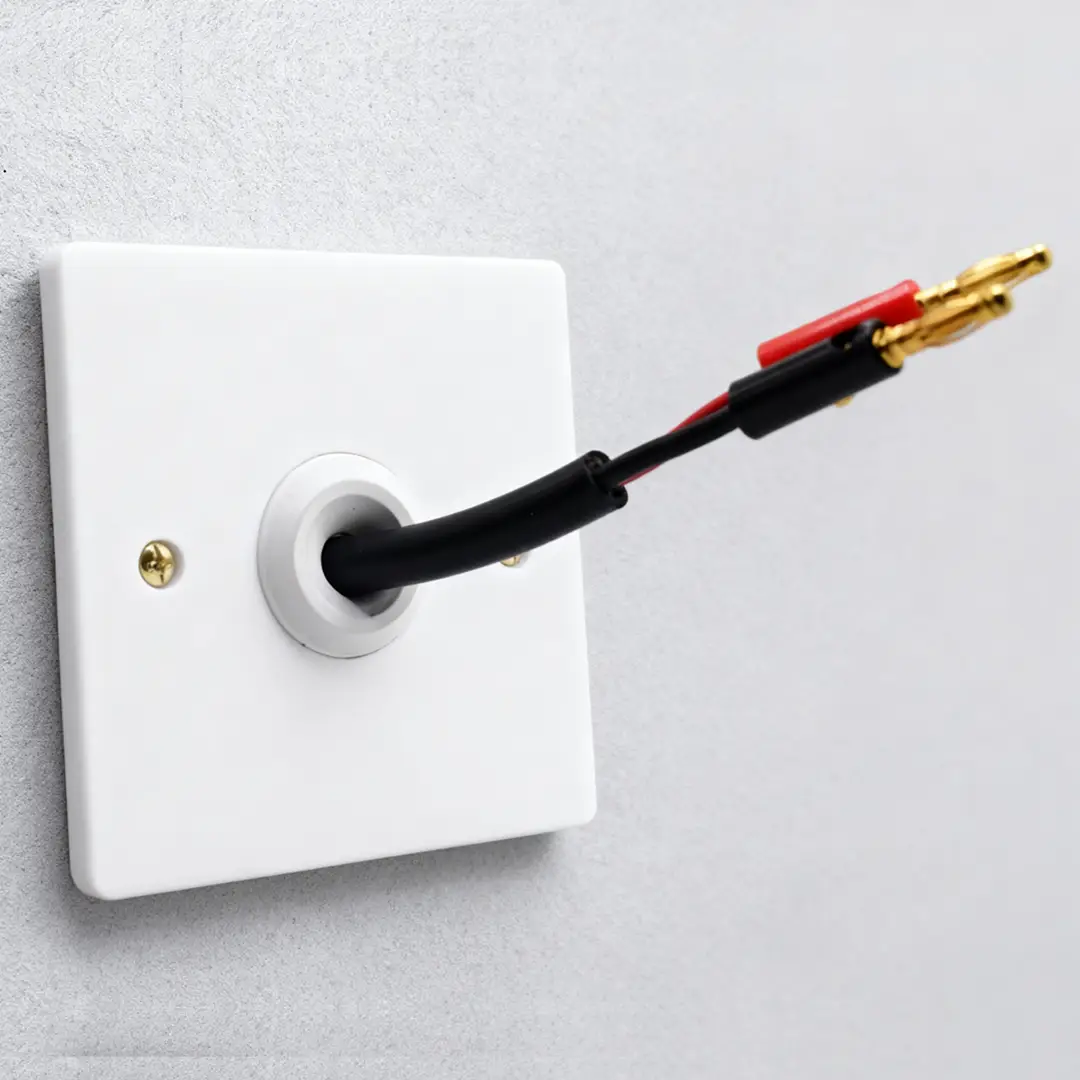
Terminate your cables with high-quality banana plugs or spade connectors rather than bare wire. This prevents oxidation over time and eliminates stray copper strands that can bridge the AV receiver’s speaker terminals, causing short circuits or receiver shutdowns.
Speaker Terminations
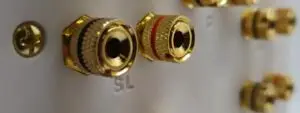
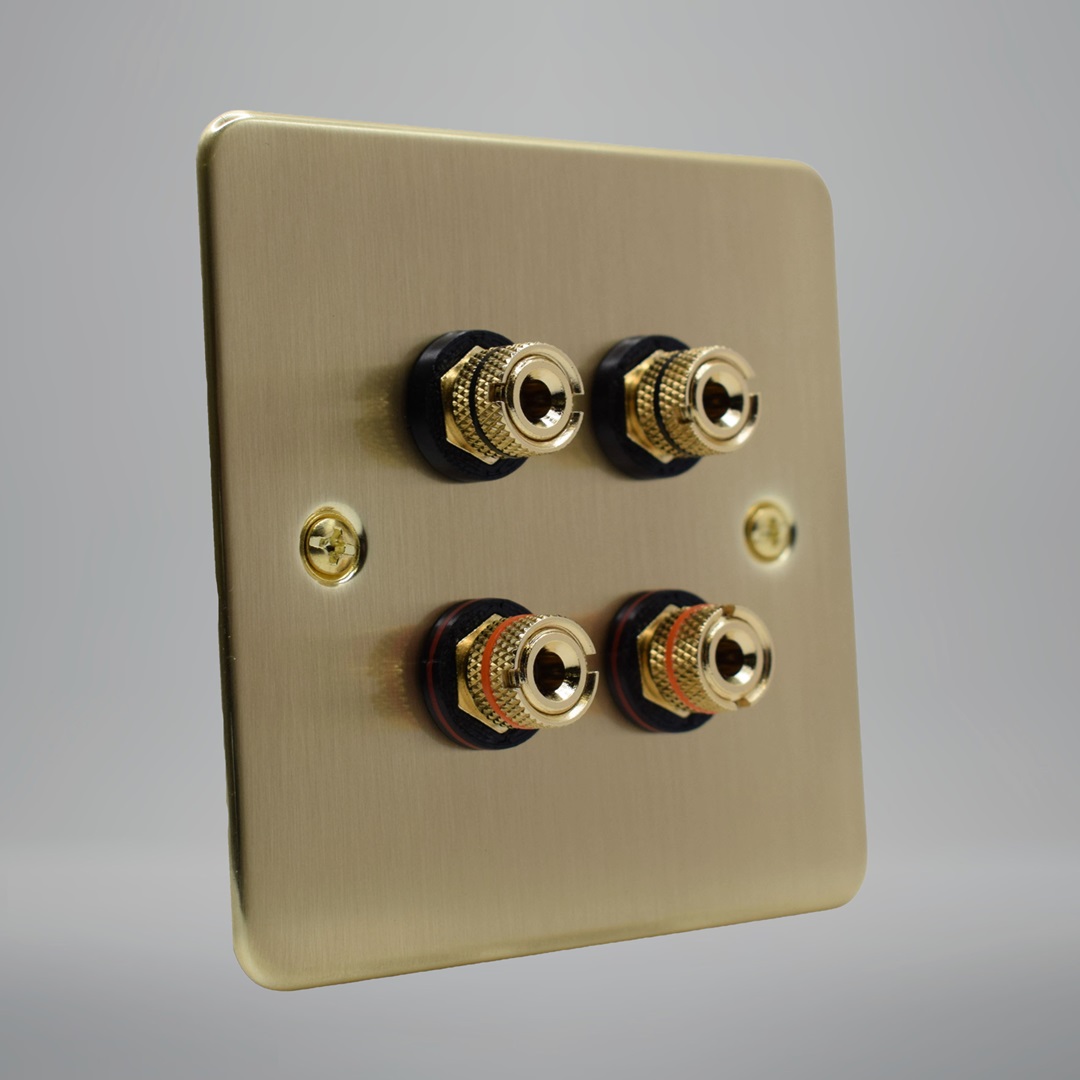
When installing your speakers and connecting them to your AV receiver/amplifier, consider how speaker terminals affect your setup. Consider installation convenience, safety, and long-term durability. With proper connections and quality terminals and speaker wall plates, audio quality stays the same.
Connection Type Overview
- Bare Wire: The great advantage is this doesn’t cost any more money whilst being universally compatible, and providing the maximum contact surface area. However, copper oxidises over time, turning green and/or brown, which degrades conductivity; stray wire strands also pose a significant risk of short-circuiting, which can damage your more expensive amplifier.
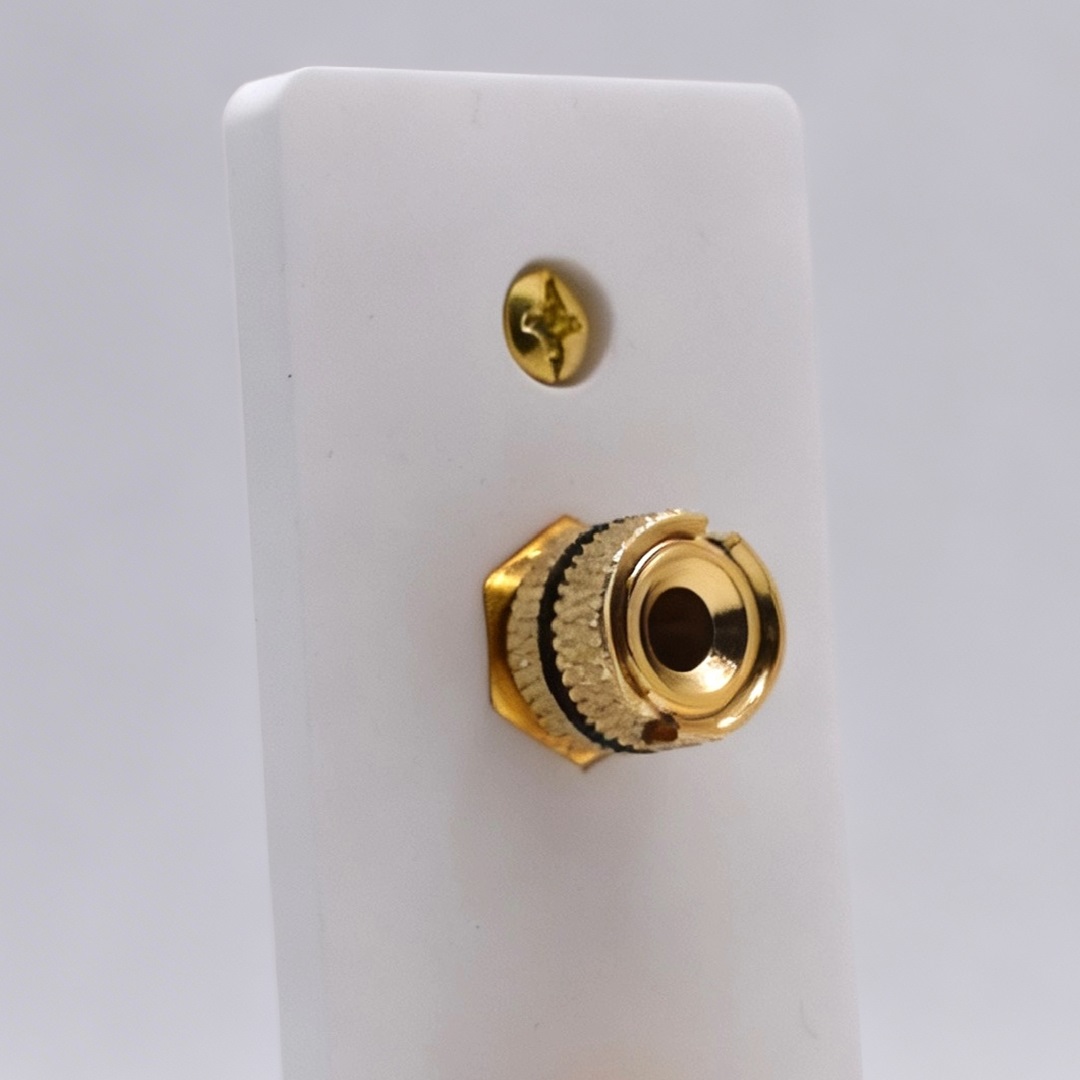
- Banana Plugs: This is the most common termination and uses a 4mm spring-loaded pin that snaps directly into the centre of binding posts or banana sockets. They offer fast plug-and-play convenience, making updates easier; the only disadvantage is that they require around 50 mm of space behind the equipment.
- Spades: These are U-shaped metal lugs that slide around a binding post shaft, then are clamped down tightly with the post’s threaded cap. This delivers rock-solid, high-tension contact that can’t be accidentally pulled out, making them ideal for higher-gauge, heavy-duty speaker cables or permanent commercial installations.
| Feature | Bare Wire | Banana Plugs | Spade Connectors |
| Primary Advantage | Zero extra cost & maximum surface contact | Easiest to plug and unplug | Most secure, high-tension clamping |
| Short Circuit Risk | High (loose copper strands) | Very Low (insulated boots) | Low (fixed metal structure) |
| Oxidation Resistance | Low (exposed raw copper) | High (gold or rhodium plating) | High (gold or rhodium plating) |
| Rear Clearance Needed | Minimal (~0.5 inches) | High (~2+ inches) | Low to Medium (~1 inch) |
| Binding Post Support | Universal (posts & spring clips) | Standard 5-way binding posts only | Threaded binding posts only |
| Ideal Use Case | Budget setups & spring-clip jacks | Frequent gear testing & tight spaces | Permanent high-end audio setups |
Summary Checklist
Before ordering your speaker wire, double-check these three rules of thumb:
- Stick to Pure OFC Copper for permanent and high-performance installations.
- Use 16 AWG for short front runs (under 4.5m), 14 AWG for medium surround runs (4.5 – 15 metres), and 12 AWG for longer runs ( 15+ metres) or 4-ohm speakers.
- Always buy LZH-rated wire whenever installing inside walls and ceilings.
If you need help placing your speakers, take a moment to read our Surround Sound Speaker Placement Guide
Related Products……..